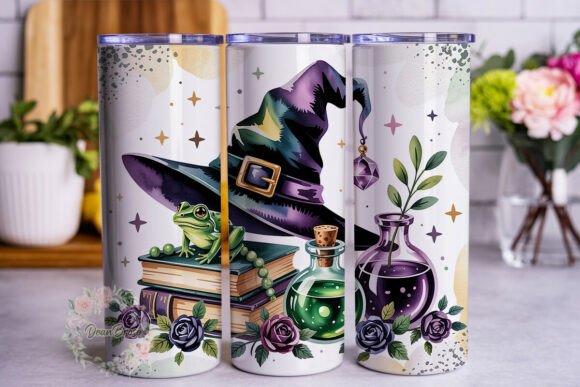
Moonlit Witch Bunny: A Designer's Review
As a designer who spends more time staring at stitch maps than most people spend watching television, I approach every new digital embroidery file with a healthy dose of skepticism. We have all been there: you buy a design based on a glossy thumbnail, only to find out later that the satin columns are too wide for the thread to cover or the fill density turns your soft fleece into a cardboard coaster. So, when I recently evaluated the Moonlit Witch Bunny Fantasy Tumbler Wrap, I didn't just look at it as a sublimation graphic; I looked at it through the lens of what it would take to translate this whimsical aesthetic into a tangible, stitched handmade product.
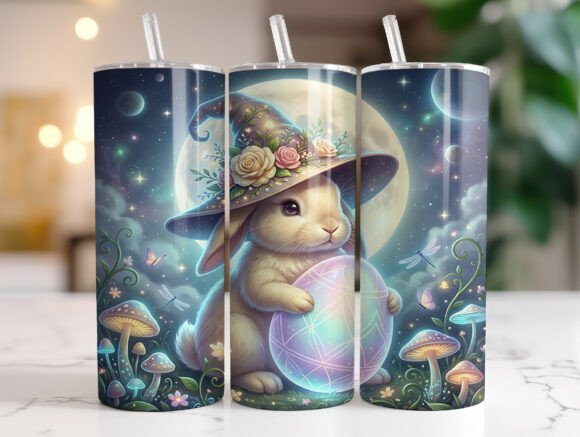
The first thing that strikes you about this design is its mood. It captures that specific niche of "cozy spooky" that dominates autumn markets and fantasy-themed boutiques. The imagery suggests a narrative—a witch's familiar under a moonlit sky—which immediately elevates it from a simple decoration to a storytelling element. While the product listing specifies this as a high-resolution PNG intended for 20oz skinny tumblers, my mind instantly went to how this visual could be adapted for a custom apparel line or a series of embroidered patches. The composition is balanced, with enough negative space to allow for clean stitching without overcrowding the fabric.
Translating Graphics into Stitch
Let's address the elephant in the room: this is listed under Tumbler Wraps and Graphics. It is a raster image (PNG), not a pre-digitized vector file like PES or DST. For an experienced embroiderer, this presents both a challenge and an opportunity. If you are planning to use this for a real embroidery project, you cannot simply load it into your machine. You must first digitize it or use it as a reference for manual punching.
However, using it as a reference for a custom applique design is where this graphic truly shines. Imagine a scenario where a client requests a unique Halloween gift for a niece who loves bunnies and magic. Instead of struggling with tiny, dense fills that might puckers on a baby onesie, you could use the Moonlit Witch Bunny Fantasy Tumbler Wrap as the template for a layered appliqué. You would trace the main shapes—the bunny silhouette, the witch hat, the moon—and cut them from felt or twill. This approach reduces stitch density significantly, resulting in a softer finished product that drapes better on a sweatshirt embroidery project or a tote bag.
The visual personality of the design lends itself beautifully to a mix of stitch types. The moon and the bunny's fur areas would benefit from a textured fill stitch to mimic softness, while the outlines of the hat and any magical sparkles could be defined with a crisp satin stitch. Because the original graphic is high resolution (300 DPI), tracing it for digitization ensures you capture those fine details without pixelation, giving you a solid foundation for creating a professional-grade machine embroidery design.
Real-World Application Scenarios
In a practical small business setting, versatility is king. I can easily see this design working across various mediums if adapted correctly. For an Etsy seller focusing on holiday goods, this could become the centerpiece of a limited-edition tote bag design. By simplifying the background elements and focusing on the central character, you create a bold statement piece that stands out at craft fairs.
Consider also the potential for embroidered patch production. The distinct shapes within the graphic are perfect for merrow-edge patches. You could produce a run of these for boutique branding, attaching them to denim jackets or canvas backpacks. The "fantasy" theme resonates strongly with the current market trends favoring cottagecore and whimsical aesthetics. Furthermore, for those offering personalized gift services, this design provides a fantastic base. You could add a name in a complementary script font below the moon, creating a bespoke item for baby embroidery projects (using softer threads) or adult holiday embroidery gifts.
The key to success here is understanding the substrate. While the original file is optimized for a curved tumbler surface, fabric behaves differently. On a flat tea towel or a structured cap, the proportions might need slight adjustment. A design that looks perfect wrapped around a cylinder might appear stretched or compressed when laid flat. Always test your layout on a printable mockup before committing to the hoop.
Critical Considerations for Execution
Before you commit to stitching this concept onto a client's garment, there are several technical hurdles to clear. Since we are discussing adapting a graphic into an embroidery context, attention to detail is paramount.
- Fabric Texture and Weight: This design features intricate details. If you attempt to stitch fine lines on a highly textured fabric like looped terry cloth or a loose-knit sweater, you will lose definition. It performs best on tight-weave cottons, canvas, or smooth fleece.
- Stabilizer Selection: Given the likely mix of fill and satin stitches, proper stabilization is non-negotiable. For stretchy fabrics like t-shirts, a cut-away stabilizer is essential to prevent distortion over time. For woven fabrics like aprons or pillow covers, a tear-away might suffice, but always err on the side of caution with complex designs.
- Thread Color Contrast: The "moonlit" theme implies a specific color palette, likely involving dark blues, purples, and bright whites. When translating this to thread, ensure your thread colors have sufficient contrast. If the bunny and the background are too similar in shade, the design will vanish from a distance. Test your color stack on scrap fabric first.
- Hoop Size Limitations: The original graphic is sized at 9.3″ x 8.2″. This is a large design. Ensure your machine's hoop size can accommodate the full scale. If you need to downsize it for a pocket logo or a baby item, be aware that small text or tiny details may merge together and become unreadable.
Commercial Viability and Brand Trust
For craft business owners, the perceived value of a product often hinges on the clarity and professionalism of the decoration. A muddy, poorly digitized version of this cute bunny could cheapen your brand. However, a well-executed adaptation signals quality. It tells the customer that you care about the finished product.
Using high-quality design assets like the Moonlit Witch Bunny Fantasy Tumbler Wrap as a starting point allows you to create something unique rather than relying on the same pre-made files everyone else is using. This exclusivity builds customer trust and encourages repeat business. Whether you are selling small shop product lines or taking custom orders, the ability to adapt a trending graphic into a durable, stitched format sets you apart from competitors who only offer printed goods.
Finally, a note on licensing. Since this is sold as a digital graphic for sublimation, you must verify the creator's terms regarding commercial embroidery use. Some artists allow their images to be used as references for handmade goods, while others restrict them to print-only applications. Always confirm the license before listing commercial embroidery items derived from this art.
In conclusion, while the Moonlit Witch Bunny Fantasy Tumbler Wrap is technically a graphic file, its artistic merit makes it a goldmine for creative embroiderers willing to put in the digitization work. With careful planning regarding stitch types, fabric choice, and stabilization, this design can transcend its original purpose to become a standout star in your collection of personalized products and seasonal decor.