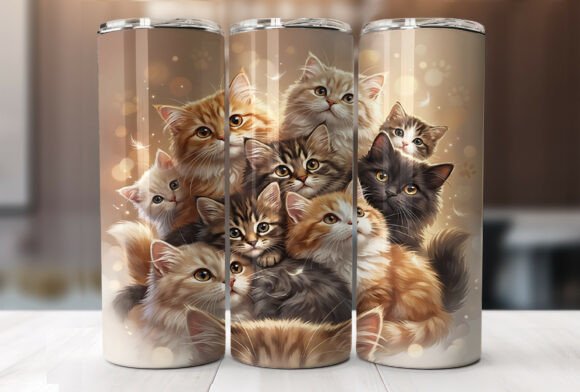
Review: Fluffy Kittens 20oz Tumbler Wrap Design
As a designer who spends more time staring at stitch maps than most people care to admit, I approach every new digital embroidery file with a mix of excitement and skepticism. We have all been there: you buy a cute design, load it onto your machine, and halfway through the run, you realize the density is too high for the fabric or the details are going to vanish into a blob of thread. That is why I took a close look at the Fluffy Kittens 20oz Tumbler Wrap Design before committing it to a client project. While the product listing categorizes this under Tumbler Wraps and Graphics, my job is to translate those visual assets into tangible, stitched reality.
First Impressions: Mood and Visual Personality
The first thing that strikes me about this design is its undeniable charm. The theme centers on "fluffy kittens," which immediately sets a playful, cozy, and inviting mood. In the world of handmade products, emotional connection drives sales, and nothing sells quite like adorable animals. The layout appears optimized for a curved surface, specifically targeting the popular 20-ounce tumbler market. However, as an embroiderer, I am not looking at how it prints on sublimation paper; I am analyzing how these shapes will translate into satin stitch and fill stitch territories.
The visual personality here is soft and rounded. There are no harsh, aggressive lines that would require ultra-fine needle work or cause registration issues on stretchy fabrics. This suggests the design is versatile enough to move beyond just tumblers. If you are running a craft business or an Etsy seller looking to expand your catalog, this graphic has the potential to become a signature motif for a whole line of goods. The key is recognizing that a high-resolution PNG intended for printing can serve as an excellent reference for creating or adapting a machine embroidery design, provided you respect the limitations of thread versus ink.
Real-World Application: From Screen to Stitch
Let's talk about a real-life scenario. Imagine a customer comes to your small shop product lineup asking for a personalized gift for a cat lover. They want something unique, not just another mug. You decide to use the aesthetic of the Fluffy Kittens 20oz Tumbler Wrap Design to create a custom embroidered tote bag. This is where practical judgment comes in. The original asset is sized at roughly 9.3 by 8.2 inches. For a standard tote bag, this is a substantial centerpiece. It commands attention.
If you were to adapt this for sweatshirt embroidery, the "fluffy" aspect of the kittens becomes a technical consideration. To mimic that fluffiness in thread, you might lean heavily on textured fill stitches or even consider an applique design approach using faux fur fabric. This adds tactile value to the finished product. For baby embroidery projects, such as a nursery blanket or a onesie, the softness of the subject matter fits perfectly. However, you must be cautious. Babies have sensitive skin, so ensuring the back of the stitching is clean and covered with a soft backing is crucial. The design's lack of overly intricate, tiny lettering (based on the visual description) makes it safer for smaller hoops and delicate fabrics often used in baby items.
For holiday embroidery gifts, think about pairing this design with seasonal colors. A kitten design isn't just for birthdays; imagine it stitched onto a kitchen towel with green and red threads for Christmas, or pastels for Easter. The versatility of the graphic allows it to pivot across seasons without losing its core appeal. When selling these as commercial embroidery items, the perceived value increases significantly when the stitch quality matches the cuteness of the image.
Technical Considerations and Fabric Compatibility
Here is the part where we need to be realistic. Just because a graphic looks good on a screen does not mean it will stitch out perfectly on every material. The Fluffy Kittens 20oz Tumbler Wrap Design features details that need careful handling. If you are working with textured fabrics like heavy canvas or waffle weave, fine details might get lost. Conversely, on thin, stretchy fabrics like jersey knit, a dense design could cause puckering.
Stitch density is the silent killer of many projects. If you are digitizing this yourself based on the PNG, or if you are purchasing a converted embroidery version, check the density settings. High-density fills on a cap or a curved surface can lead to distortion. Speaking of caps, while the design is sized for a tumbler, placing a 9-inch wide design on a standard baseball cap is impossible without significant resizing. If you shrink it down for a hat, ensure the small details do not merge together. Tiny whiskers or eye details might need to be simplified or removed entirely for smaller hoop sizes.
Dark fabrics present another challenge. If the original graphic relies on light colors to define the "fluffy" edges, stitching those same colors onto black fleece might result in poor contrast. You may need to adjust the thread colors or add a white underlay to make the design pop. Always test the design on scrap fabric that matches your final product. This simple step saves money and protects your reputation as a professional.
Enhancing Brand Value and Customer Trust
In the competitive landscape of digital product sellers and handmade creators, consistency is king. Using a cohesive design element like these fluffy kittens across different products—tote bags, pillows, aprons—helps build brand recognition. When a customer sees that specific style of kitten, they should immediately think of your brand. This builds trust. A well-executed embroidered patch featuring this design can serve as a logo or a premium add-on for other purchases.
The presentation of the personalized gift matters immensely. If the stitching is sloppy or the fabric puckers, the charm of the kitten is lost. But when executed with precision, using the right stabilizer and high-quality thread, the result is a high-value item that customers are happy to pay a premium for. It elevates a simple graphic into a piece of art. For printable mockups used in your online store, ensure the digital representation accurately reflects what the stitched version will look like to avoid customer disappointment.
Designer Notes for Success
Before you launch this into production, keep these practical tips in mind:
- Test First: Always run a sample on the exact fabric you plan to use. What works on cotton might fail on polyester.
- Check Contrast: View your design in black and white to ensure the values separate clearly. If it looks muddy in grayscale, it will look muddy in thread.
- Verify Licensing: Since the source is a digital graphic file, confirm the license terms. Can you sell physical items made with this design? Can you resell the digitized embroidery file? Never assume; always read the fine print to protect your craft business.
- Mind the Hoop: Ensure your machine's hoop size can accommodate the dimensions if you are stitching it full size. For larger items like blankets, you may need to use a "hoop-and-rehoop" method or split the design.
- Stabilizer Selection: Don't skimp here. For fluffy, detailed designs, a cut-away stabilizer often provides better long-term support than tear-away, especially for items that will be washed frequently.
The Fluffy Kittens 20oz Tumbler Wrap Design offers a delightful foundation for creative entrepreneurs. Whether you are making custom apparel, decorating home goods, or creating unique design assets for your portfolio, the potential is there. It requires a thoughtful approach to translation from pixel to thread, but with the right technique and attention to detail, it can become a bestseller in your shop. Remember, the difference between a good product and a great one often lies in the execution. Treat this design with the care it deserves, and your customers will love the result.